
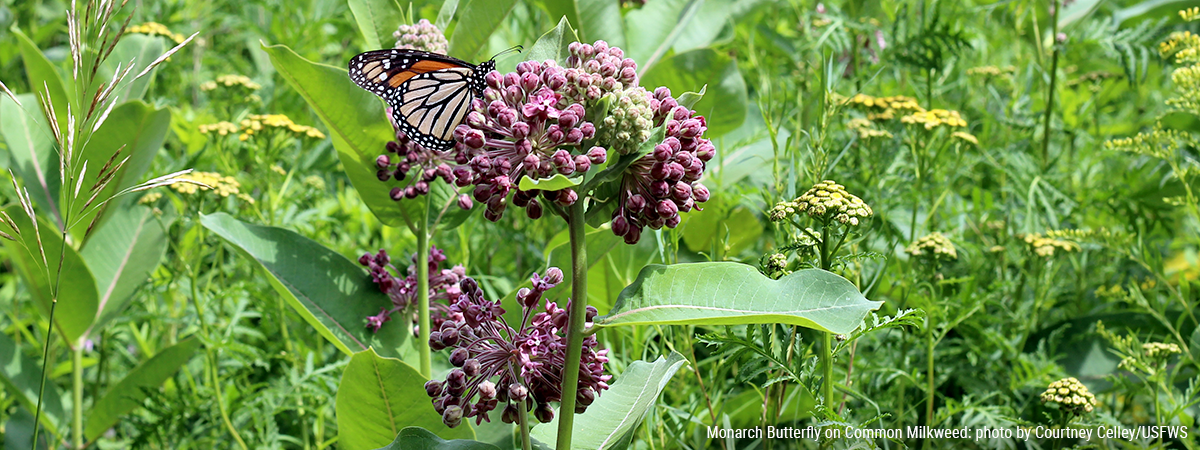
If you are looking at this page, you must have received a seed packet from the Centerville-Washington Park District! The seeds were harvested, cleaned and packaged by volunteers to be given away. We are hoping to create pollinator habitats across Centerville and Washington Township!
Please note: Since our seeds are cleaned by hand, you will notice that there is some chaff (bits other than seeds) in your packets.
Why plant native seeds?
Because they help wildlife! Food chains start with healthy soil and plants. We cannot help our birds and butterflies without starting with the basics.
Planting your seeds
Seeds are best planted 1/3 of an inch into the soil. Most native seeds need to go through a winter so the freezing and thawing will break the seed coat. We recommend planting them before November. If they are planted in the spring, they may not grow until the following year, or they may not flower until then.
Stratification
Many of our native seeds require a period of winter-like conditions in order to germinate. Since we harvest our seeds in the fall and keep them dry, they have not been exposed to natural winter weather conditions the way a seed in nature would. The seeds you receive from CWPD will need to go through a natural winter outside in soil before you will see results. Another option is Stratification. This is a way to encourage germination in seeds.
Different seeds have different stratification requirements. Some need moist and some need dry conditions. Others need to be stratified for 60 days, while some can be 30 days. If you are planning to stratify seeds requiring cold temperatures, please use your refrigerator.
More information on species-specific germination codes >
Again, the easiest thing to do is to plant your seeds in November-December and allow nature to promote germination, but you can hurry the process along using the above methods.
Some seeds do not need any pre-treatment and can be planted in early Spring.
Seed List
Common Milkweed (Asclepias syriaca)
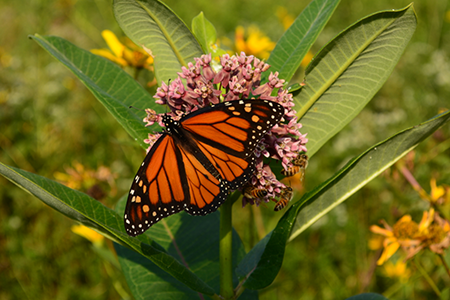
- Perennial
- Height: 3 – 5 ft
- Bloom color: Pink
- Bloom period: June – August
- Requirements: Full sun
- Benefits: Nectar plant to pollinators, Monarch Butterfly host plant
- Germination requirements: Pretreatment is not required, but it can increase germination rates.
Compass Plant (Silphium laciniatum)
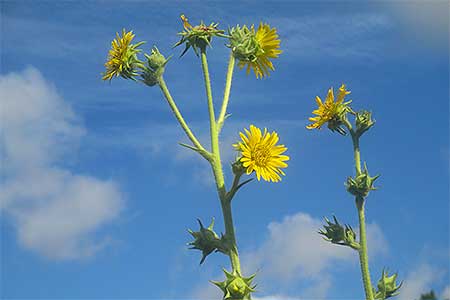
- Perennial
- Height: 3 – 10 ft
- Bloom color: Yellow
- Bloom period: July – September
- Requirements: Full sun, dry soils
- Ecological significance: Taproot can reach 15 feet — special value to native bees and bumblebees.
- Germination requirements: Pretreatment is required before sowing.
Foxglove Beardtongue (Penstemon digitalis)
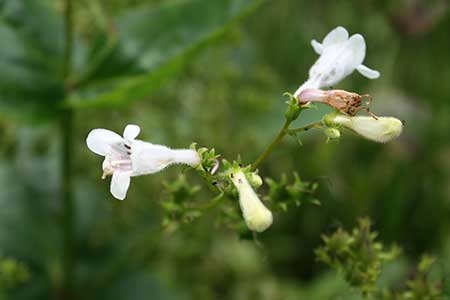
- Perennial
- Height: 2 – 5 ft
- Bloom color: White
- Bloom time: April – June
- Requirements: Sun – part shade, Moist – dry soil
- Ecological significance: This plant attracts hummingbirds and bumblebees. It has the designation of Special Value to Native Bees from the Xerxes Society for Invertebrate Conservation.
- Germination requirements: Pretreatment is required before sowing.
Gray-headed Coneflower (Ratibida pinnata)
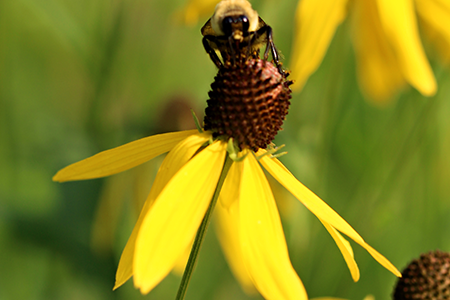
- Perennial
- Height: 3 – 5 ft
- Bloom color: Yellow
- Bloom period: July – late September
- Requirements: Full sun or part shade, Dry and moist soils
- Benefits: Birds eat the seeds
- Germination requirements: Pretreatment is not required, but it can increase germination rates. (In the germination guide, they use the common name Yellow Coneflower)
Marsh Blazing Star (Liatris spicata)
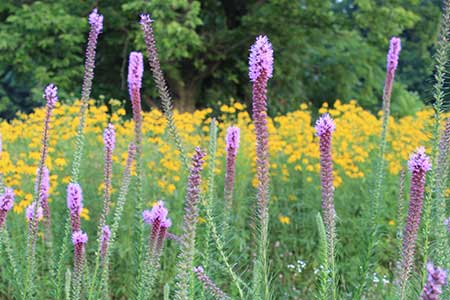
- Perennial
- Height: 2 – 6 ft
- Bloom color: Purple
- Bloom period: July – September
- Requirements: Full sun, moist soils
- Ecological significance: Liatris is a nectar source for butterflies and hummingbirds. It is also designated a Special Value to Native Bees by the Xerxes Society for Invertebrate Conservation.
- Germination requirements: Pretreatment is required before sowing.
Ohio Spiderwort (Tradescantia ohiensis)
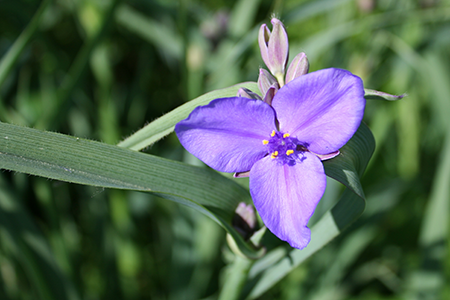
- Perennial
- Height: 1 – 3 ft
- Bloom color: Purple, Blue
- Bloom period: May – July
- Requirements: Part shade, Dry soils
- Benefits: Bumble bees
- Germination requirements: Pretreatment is required before sowing.
Partridge Pea (Chamaecrista fasciculata)
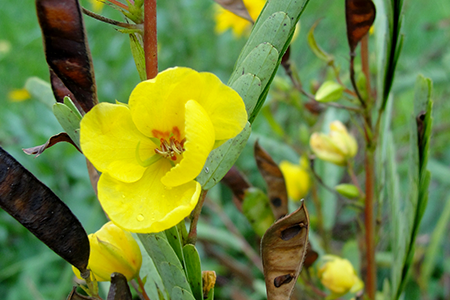
- Annual
- Height: 1 – 3 ft
- Bloom color: Yellow
- Bloom period: July – October
- Requirements: Sun or Part shade, dry-moist soils
- Benefits: Host plant of Silver Spotted Skipper Butterfly. Birds eat the seeds.
- Germination requirements: Pretreatment is required before sowing.
Prairie Dock (Silphium terebinthinaceum)
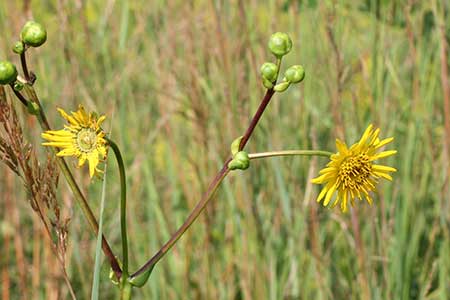
- Perennial
- Height: 3 – 8 ft
- Bloom color: Yellow
- Bloom period: June – September
- Requirements: Full sun, moist – wet soils
- Ecological significance: Special value to honeybees, bumblebees and other native bees.
- Germination requirements: Pretreatment is required before sowing.
Prairie Dropseed (Sporobolus heterolepis)
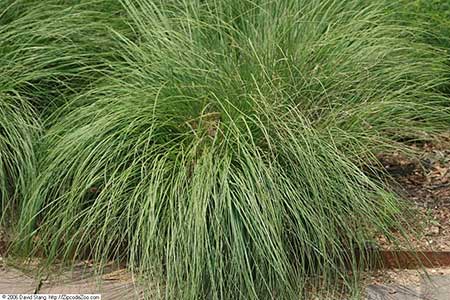
- Perennial
- Height: 1 – 3 ft
- Bloom color: Yellow/green
- Bloom period: June – August
- Requirements: Full sun, dry soil
- Ecological significance: Provides nectar for pollinators. Attracts hummingbirds, moths and bumblebees.
- Germination requirements: No pretreatment is needed.
Purple Joepyeweed (Eutrochium purpureum), also called Sweet Joe Pye Weed
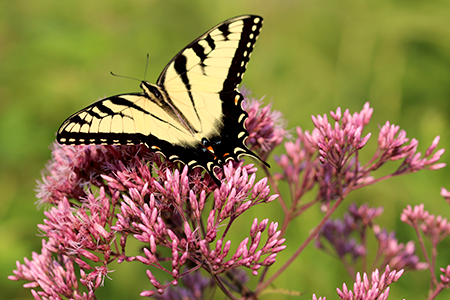
- Perennial
- Height: 3 – 6 ft
- Bloom color: Pink-Purple
- Bloom period: July – September
- Requirements: Sun – part sun, moist soils
- Ecological significance: Many bees use the nectar from this plant in honey production.
- Germination requirements: Pretreatment is not required, but it can increase germination rates.
Rattlesnake Master (Eryngium yuccifolium)
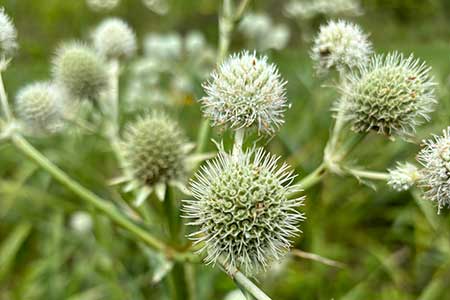
- Perennial
- Height: 3 – 6 ft
- Bloom color: Green
- Bloom period: July – August
- Requirements: Full sun, moist soils
- Ecological significance: Special value to native bees.
- Germination requirements: Pretreatment is required before sowing.
Swamp Rose Mallow (Hibiscus moscheutos)
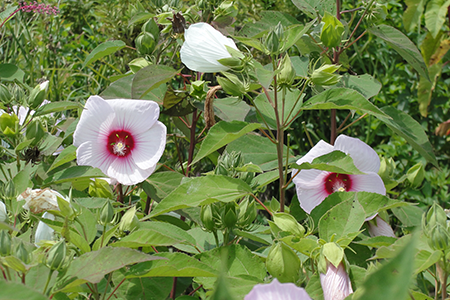
- Perennial (Shrub)
- Height: 3 – 6 ft
- Bloom color: White, Pink
- Bloom period: July – September
- Requirements: Sun or part sun, moist soil
- Benefits: attracts hummingbirds, bumble bees, moths
- Germination requirements: Pretreatment is required before sowing.
Wild Bergamot (Monarda fistulosa)
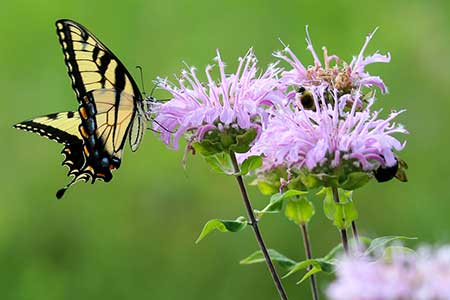
- Perennial
- Height: 2 – 5 ft
- Bloom color: Pink, Purple
- Bloom time: June – September
- Requirements: Sun – part shade, Dry – moist soils
- Ecological Significance: Nectar source for bees, butterflies, and hummingbirds. Special Value to Native Bees (designation by the Xerxes Society for Invertebrate Conservation)
- Germination requirements: No pretreatment is needed.
Wingstem (Verbesina alternifolia)
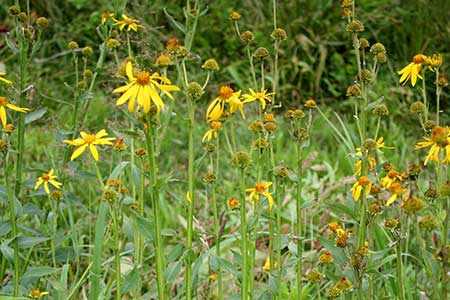
- Perrennial
- Height: 3 – 5 ft
- Bloom color: Yellow
- Bloom time: August – October
- Requirements: Full sun, moist soils
- Ecological significance: Special value to honeybees, bumblebees and other native bees.
- Germination requirements: Pretreatment is not required, but it can increase germination rates.
Moving forward
We encourage you to take steps beyond seeds to create a space for wildlife in your yard. We have a downloadable packet (PDF) to help you on your journey. This packet was created for families who want to certify their backyard through the National Wildlife Federation. It also has activities and opportunities to contribute to science!